Curating Furniture for the Concrete Era
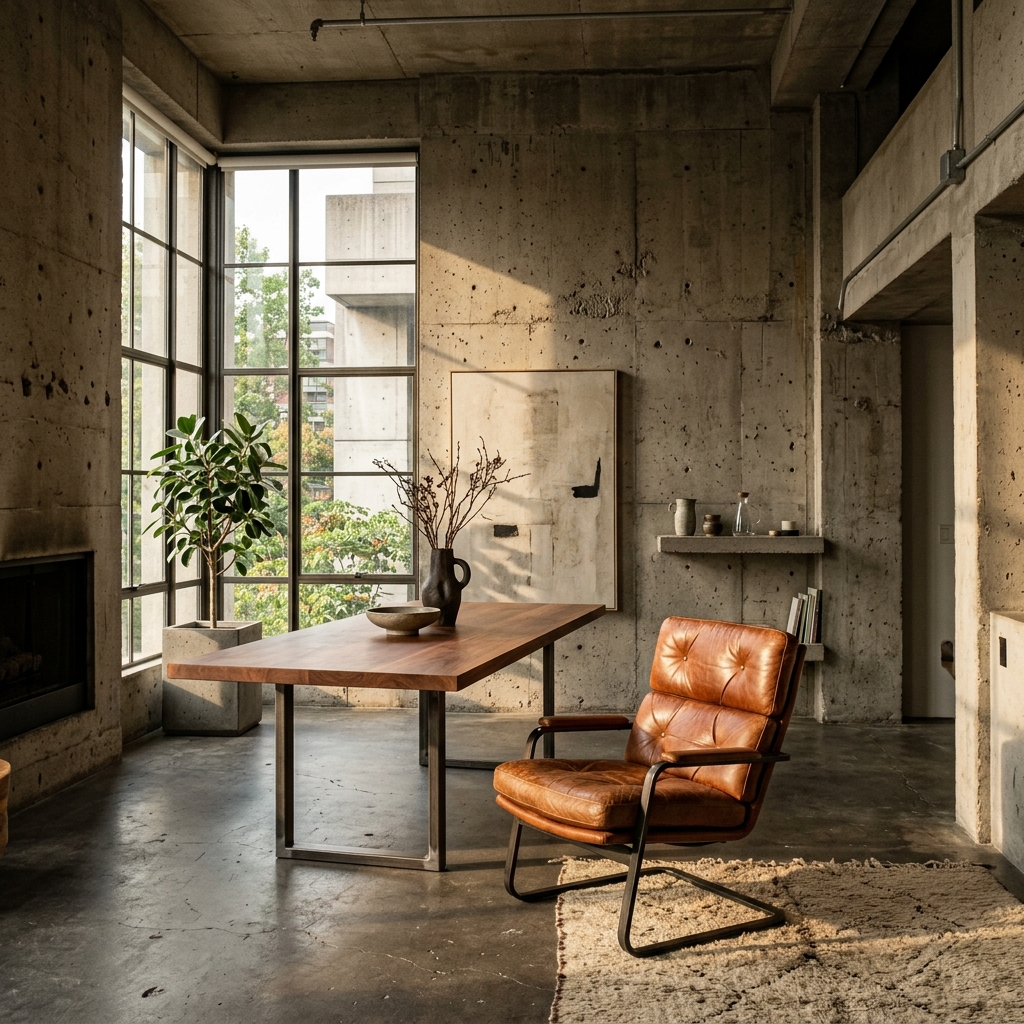
Softening the Brutal
Exposed concrete has moved from parking garages and structural cores directly into the living room. The brutalist resurgence in contemporary interior design celebrates the raw, unpolished, and structurally honest nature of concrete. However, living inside a concrete box can feel sterile and acoustically harsh.
The secret to mastering this aesthetic lies in the curation of furniture: using the warmth of organic materials to counterbalance the cold austerity of the architecture.
The Importance of Timber
Wood is the natural antidote to concrete. When placing furniture against an exposed concrete wall, select pieces crafted from rich, warm woods like walnut or solid oak. The deep grain and organic imperfections of the timber provide a striking visual contrast to the flat, gray expanse of the concrete.
A solid walnut dining table in a concrete-clad room doesn't just provide a place to eat; it anchors the space with warmth and life.
Textural Contrast: Bouclé and Leather
Concrete is hard; therefore, the upholstery must be exceptionally inviting.
Bouclé fabrics, with their heavy, looped texture, introduce a necessary softness that absorbs both light and sound, mitigating the echo inherent in concrete spaces.
Full-grain leather, especially in rich tan or cognac colors, pairs beautifully with industrial finishes. Leather ages and patinas over time, introducing a dynamic, living element into an otherwise static architectural shell.
Structural Honesty in Furniture
Just as brutalism exposes the structural truth of a building, the furniture within it should exhibit structural honesty. Avoid pieces with hidden joinery or faux finishes. Instead, choose chairs where the steel frame is visible, or tables where the mortise and tenon joints are proudly displayed.
When the architecture strips away the drywall to reveal the bones of the building, the furniture must similarly refuse to hide how it was made.