The Architecture of Ceramics: Large Format Tiles in Modern Rwandan Spaces
Beyond the Standard Grid
For decades, the standard 60x60cm ceramic tile was the default choice for commercial and residential floors in Kigali. However, a significant architectural shift is occurring in Rwanda's luxury developments: the rapid adoption of large-format ceramic slabs.
These slabs, often reaching dimensions of 120x240cm or larger, represent more than just a change in size; they are a fundamental shift in how we perceive interior surfaces.
The Eradication of Grout
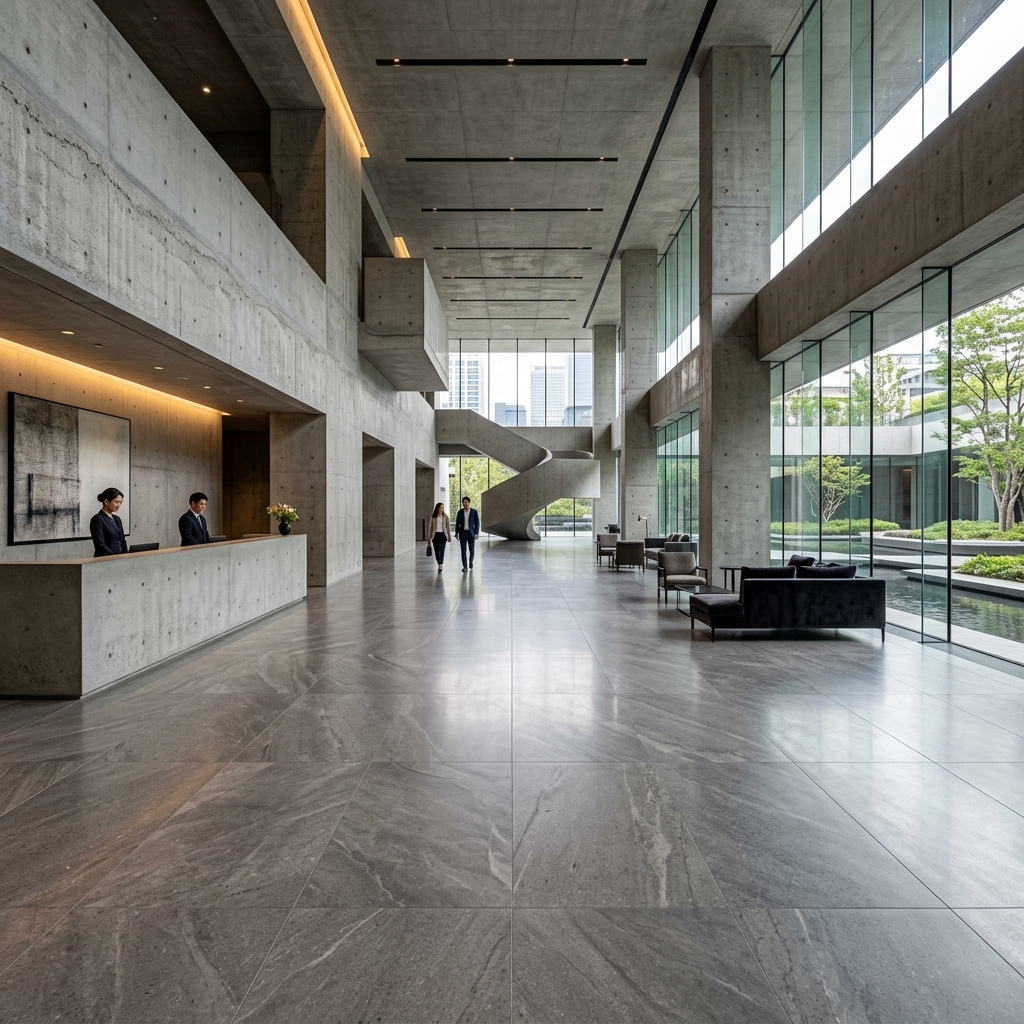
The primary visual benefit of large-format tiles is the drastic reduction of grout lines. In a traditional grid, grout lines interrupt the visual field, breaking the floor into hundreds of fragmented squares. Large slabs create a nearly seamless, monolithic surface.
This uninterrupted expanse tricks the eye into perceiving the room as much larger than its physical dimensions. It’s an optical illusion driven by material science.
Emulating Nature at Scale
Advancements in high-definition digital printing on ceramics mean that large slabs can perfectly mimic natural stone, marble, or concrete. But unlike natural stone, which is porous, heavy, and structurally unpredictable at large sizes, ceramic slabs offer the aesthetic of a massive marble monolith with the engineered durability and low weight of porcelain.
Application Beyond Floors
In modern Rwandan architecture, these slabs are migrating off the floor. We are seeing them used as continuous wall cladding in hotel lobbies, as floor-to-ceiling bathroom panels, and even fabricated into custom kitchen countertops. The ability to fold the same material from the floor up the wall creates a stunning, immersive architectural envelope.
The Installation Challenge
It must be noted that installing large-format tiles requires exceptional precision. The substrate must be perfectly level, and specialized handling equipment with suction cups is required to maneuver the slabs without cracking them. It is an investment in elite craftsmanship that yields an uncompromising aesthetic result.